




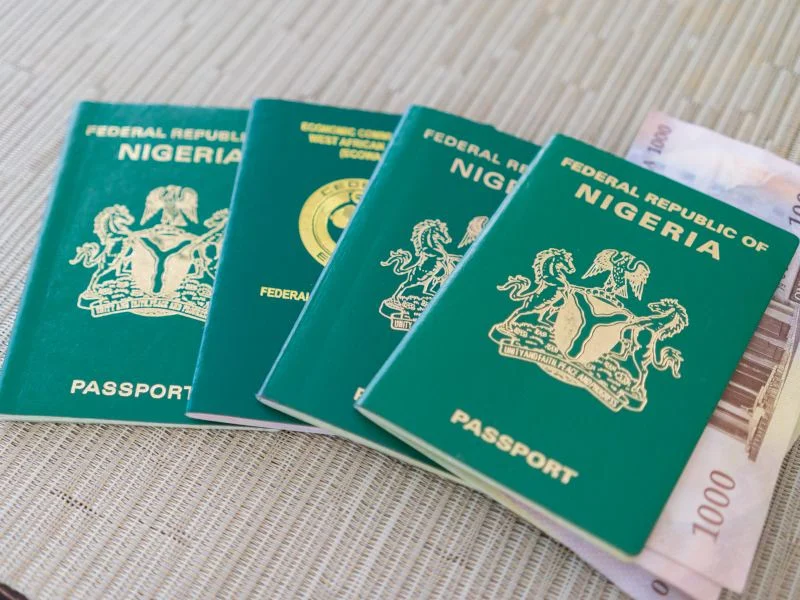

Nigeria’s passport has plunged to 181st position in the latest IziVisa Passport Ranking Index, with visa-free access falling to 24 destinations, raising fresh concerns about the country’s international mobility and the growing travel restrictions facing its citizens.
Data published on IziVisa.com show that Nigerian passport holders can enter 24 countries without a visa, obtain visas on arrival in 16 countries and apply for electronic visas to access another 43 destinations.
The latest ranking marks a sharp contrast with the 90th position Nigeria reportedly occupied in July 2026, when its passport offered visa-free access to 44 destinations.



The reported decline of 20 visa-free destinations highlights the challenges Nigerians face when travelling abroad for business, education, tourism and other opportunities. However, the figures come from different ranking systems and should not be interpreted as proof that 20 countries have individually withdrawn visa-free access to Nigerians.
IziVisa ranks passports according to the travel access they provide, taking into account visa-free entry, visas on arrival and electronic visa arrangements.
The distinction between these categories matters because visa-free travel allows eligible visitors to enter without obtaining a visa beforehand, while visas on arrival and electronic visas involve additional procedures.
For Nigerian travellers, these requirements can affect the cost, preparation time and convenience of international trips.
Nigeria trails leading African passports
The reported ranking places Nigeria far behind several African countries whose passports provide broader access to international destinations.
South Africa ranked 49th globally in the July 2026 Henley Passport Index, with visa-free access to 101 destinations. Botswana followed in 61st position with 81 destinations, while Morocco ranked 67th with access to 71 destinations.
Kenya occupied 68th position with access to 70 destinations, while Ghana ranked 70th with a visa-free score of 67.
Nigeria, meanwhile, shared the 90th position in the July edition of the Henley index with the Democratic Republic of the Congo and Turkmenistan, with each passport providing access to 44 destinations without a prior visa.
The difference between Nigeria and some of its African counterparts illustrates the uneven distribution of international travel opportunities across the continent.
For Nigerian entrepreneurs, students and professionals, limited visa-free access can mean additional paperwork, application fees and uncertainty when planning international engagements.
These restrictions can also complicate business travel, particularly for entrepreneurs who need to attend conferences, meet investors or pursue commercial partnerships at short notice.
UAE leads IziVisa ranking
The United Arab Emirates topped the 2026 IziVisa Passport Ranking Index, with its passport providing access to 185 of 198 documented destinations through visa-free entry, visas on arrival or electronic visas.
Switzerland ranked second, with access to 120 destinations without a visa, 26 destinations offering visas on arrival and 37 accessible through electronic visas.
Luxembourg, Malta, Denmark, Spain and Finland also featured prominently among the leading passports.
The rankings reflect the substantial differences in international mobility available to citizens of different countries.
While passport rankings measure travel access rather than the full economic strength of a country, they can influence how easily citizens pursue international education, employment, tourism and business opportunities.
Henley index offers a different picture
The July 2026 edition of the Henley Passport Index placed Nigeria 90th out of 199 passports assessed worldwide, with visa-free access to 44 destinations.
Henley & Partners said the index marked its 20th anniversary and used data from the International Air Transport Association to assess 199 passports against 227 travel destinations.
Nigeria’s position represented a one-place decline from 89th in the April 2026 edition, although its visa-free score remained unchanged at 44 destinations.
The difference between the Henley and IziVisa rankings requires careful interpretation. The two organisations use separate methodologies and coverage, so their rankings cannot be compared directly as if they measured exactly the same set of destinations under identical rules.
Consequently, the reported fall to 181st in the IziVisa index does not, on its own, establish that Nigeria’s passport has suffered an equivalent decline under every international passport ranking.
Travellers should also confirm entry requirements with the relevant destination’s authorities before booking flights, as visa policies can change independently of published rankings.
Why Nigeria’s passport access matters
Nigeria’s reported position raises a broader question about the practical cost of restricted international mobility for a country with a large population, an active business community and a substantial diaspora.
When citizens must obtain visas before travelling to many destinations, they may face longer planning periods, additional documentation requirements and expenses that travellers from more mobile countries do not encounter.
For Nigerian startups seeking foreign investment, these barriers can complicate participation in international technology conferences and meetings with potential partners. Students may also face additional hurdles when attending academic programmes, while small businesses can find last-minute travel more difficult to arrange.
However, passport strength depends on more than the number of destinations citizens can enter without visas. Diplomatic relationships, reciprocal travel agreements, security cooperation and immigration policies all influence the access countries grant to foreign visitors.
Nigeria’s long-term improvement will therefore require sustained diplomatic engagement and efforts to strengthen international confidence in its travel documents and border-management systems.
For TechMarge, the key issue is not simply Nigeria’s position on a passport ranking table, but what restricted travel access means for citizens trying to compete globally. Better international mobility could reduce friction for Nigerian businesses, students and professionals, but meaningful progress will depend on verifiable improvements in visa arrangements rather than changes in ranking positions alone.
Until the reported figures and their underlying methodology are reconciled, travellers should treat the IziVisa result as a separate assessment rather than definitive evidence that Nigeria has lost visa-free access to 20 destinations since July.