






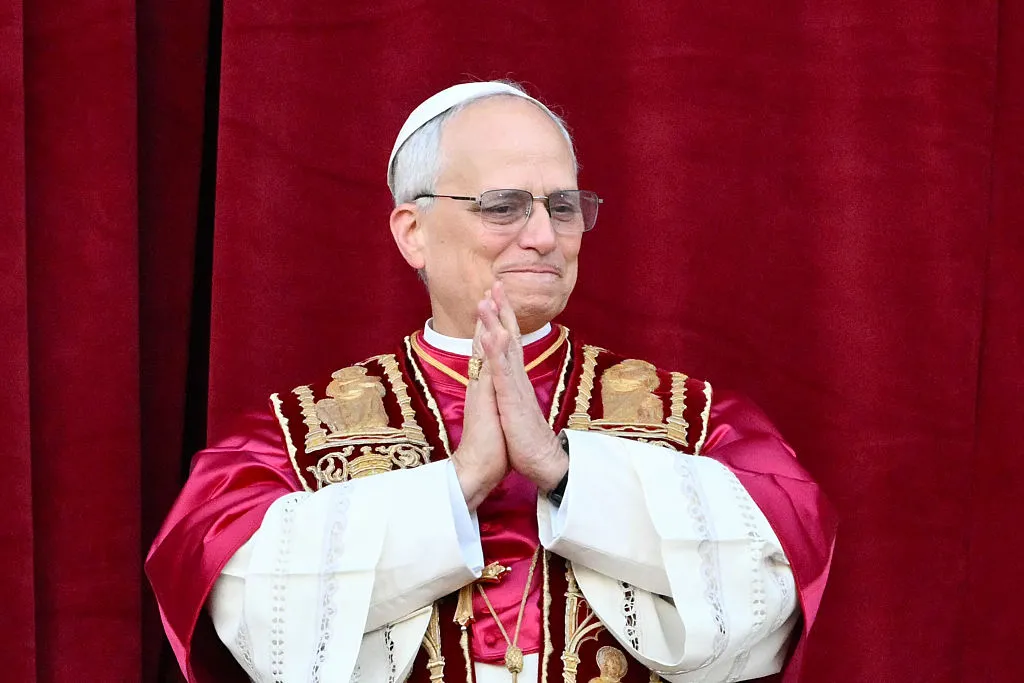


Pope Leo XIV published his first encyclical on Monday, titled Magnifica Humanitas, focusing on “safeguarding the human person in the time of artificial intelligence.” While the document centers on AI, the pope highlights broader issues such as inequality, war, weakening democracies, and the growing concentration of power among elites.
In the 200-page document, which Pope Leo presented alongside Anthropic co-founder Chris Olah, he argues that technology controlled by a small group cannot truly serve the common good.
“When such power is concentrated in the hands of a few, it tends to become opaque and evade public oversight, increasing the risk of distorted forms of development that give rise to new dependencies, exclusions, manipulations and inequalities,” Leo wrote.
The pope also warned that AI strengthens the influence of those who already control wealth, expertise, and data.
“In fact, as with every major technological shift, AI tends to amplify the power of those who already possess economic resources, expertise and access to data,” the encyclical states. Leo added that elites can use AI to “shape information and consumption patterns, influence democratic processes and steer economic dynamics to their own advantage.”
The encyclical arrived days after President Donald Trump delayed signing an executive order on AI oversight. The proposed order would have required government review of new AI models before release. Reports say venture capitalist and former White House AI adviser David Sacks pushed for the delay.
Pope Leo called for governments and companies to establish “clear criteria and effective oversight” for AI systems, with direct input from affected communities.
He also urged leaders to end the global AI arms race, criticizing efforts by companies and governments to build increasingly powerful algorithms and larger datasets in pursuit of geopolitical and commercial dominance.

“To disarm means discrediting the assumption that technical power automatically confers the right to govern,” Leo wrote.
The pope connected today’s AI concerns to older struggles over concentrated power. He referenced Pope Leo XIII’s 1891 encyclical Rerum Novarum, which addressed economic inequality during the Industrial Revolution.
More recent examples include Elon Musk’s acquisition of Twitter and the use of the platform to support Trump’s election campaign, as well as major political donations from tech leaders aimed at blocking AI regulation.
Pope Leo ultimately argued that modern AI systems dramatically raise the stakes of these long-standing power imbalances.
Paolo Carozza, a professor at Notre Dame Law School, member of the Pontifical Academy of Social Sciences, and chair of the Meta Oversight Board, told TechCrunch that AI-generated misinformation and deepfakes have “corroded our capacity to recognize what’s true and what’s not true.”
Carozza also criticized the tech industry’s practice of “harvesting and manipulating” human data, warning that it creates “fundamental challenges to cognitive freedom.”








Great post,Thanks for sharing