







A passenger in Abuja has taken legal action against ride-hailing company inDrive, accusing it of negligence and breach of duty of care after a distressing experience with one of its dispatch riders. The passenger, Ms. Deborah Godfrey Bassey, said she suffered emotional and financial loss when the rider made away with her delivery items, valued at about ₦800,000. This marks the second time in recent weeks that inDrive has faced public criticism over the conduct of its riders.
The law firm representing Deborah, CHIGBUE & CHIGBUE, through Associate Counsel Piye Garuba, filed a Pre-action Notice and Letter of Demand on September 30, 2025. The firm said it is acting on behalf of Deborah, who suffered emotional trauma and financial loss due to the alleged misconduct of the dispatch rider identified as Chukwudi Chinemere Madaukor. The letter stated clearly that Chukwudi’s actions caused significant distress and that inDrive failed in its duty to supervise and ensure accountability among its riders.
According to the letter, which Deborah shared on her X account, she hired an inDrive rider through the app to deliver some items from No. 11 Turner Crescent, Wuye, to Gold City Estate in Lugbe, Abuja, on October 16, 2025. The items included a burgundy bone straight wig worth ₦450,000, a food bowl containing stew, two rings (one gold and one fashion ring), and two packs of biscuits. Although the app fixed the fare at ₦2,400, the rider negotiated ₦2,700, saying the distance was farther than expected. Deborah agreed to the new price, and the rider confirmed pickup on the inDrive app before beginning the trip.
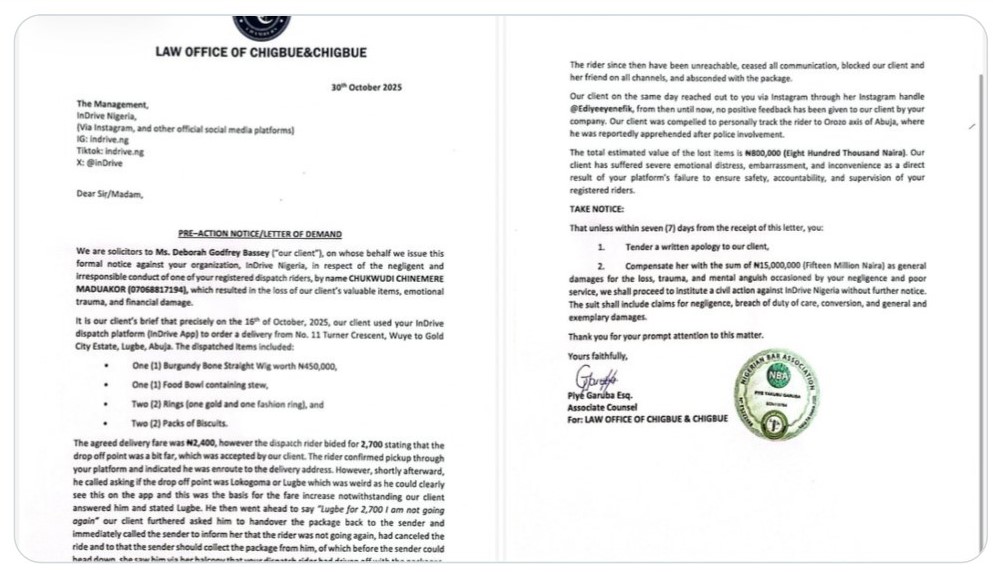
Not long after, he called her to confirm whether the destination was Lugbe or Lokogoma. Deborah reminded him that it was Lugbe, the agreed drop-off point. The rider then complained that he would not go to Lugbe for ₦2,700 and abruptly cancelled the trip. Deborah told him to return the package to the sender and immediately informed the sender to collect the items from him. However, before the sender could reach him, the rider had driven off with the packages.
Deborah’s attempts to reach the rider failed. He blocked both her and the sender on all communication channels, making himself unreachable. She then contacted inDrive through Instagram to report the issue, but no meaningful response came from the company. Frustrated, she turned to the police for help and managed to track down the rider to the Orozo area of Abuja, where he was reportedly apprehended.
Despite that, inDrive did not offer any apology or compensation. Deborah, through her lawyers, is demanding ₦15 million in damages for the loss, trauma, and mental anguish she endured. The legal document insists that inDrive must issue a written apology and compensate her within seven days from October 30, or face a full-scale civil action in court.
The letter accuses inDrive of failing to ensure the safety and supervision of its registered riders, which resulted in the theft of valuable items and emotional harm to the client. It argues that the company’s lack of accountability contributed to the rider’s misconduct and the subsequent distress experienced by Deborah.


As of now, inDrive has not released any public statement on the lawsuit or responded officially to the allegations. The situation has sparked growing discussion on social media about rider accountability and customer protection in Nigeria’s ride-hailing industry.
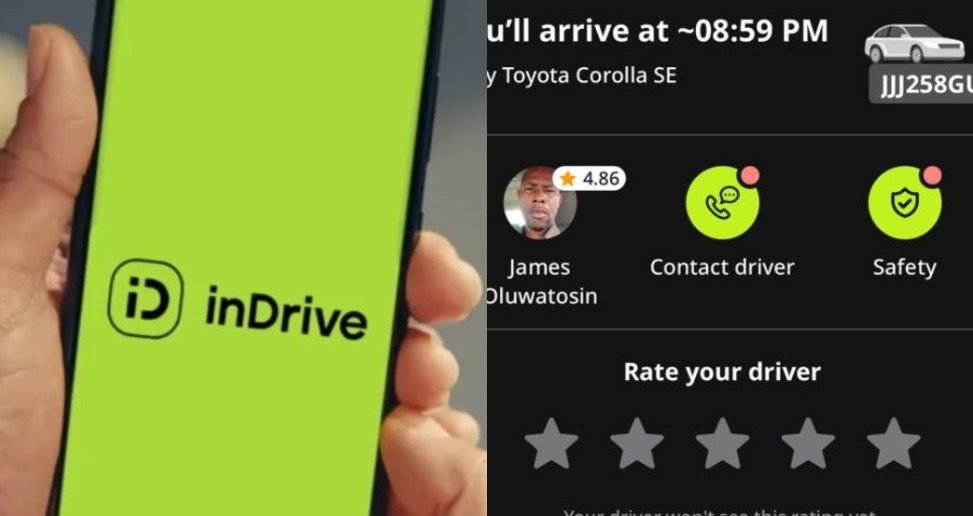
This incident follows another controversy that involved inDrive just two weeks earlier. In that case, a driver named James Oluwatosin was accused by a passenger of robbery conspiracy. After an internal investigation, inDrive reinstated Oluwatosin’s account, stating that there was no clear evidence to support the accusations against him. The company’s statement at the time tried to calm public tension over the viral allegations, but this new legal case has again brought the company under scrutiny.
For now, Deborah’s legal team maintains that the case is not only about her personal loss but also about corporate responsibility. They argue that ride-hailing platforms must do more to protect customers, verify rider identities, and prevent misconduct that damages public trust. The demand for compensation, they say, is not just for the financial loss but also for the emotional harm and breach of trust that Deborah experienced through a service she once believed was safe and reliable.