






Justin Wenig often looks back on his Y Combinator days in 2019 with a mix of nostalgia and hard-earned lessons. At the time, he was building his first startup, Coursedog, a company designed to give higher education institutions and state departments better tools to manage their systems. It didn’t take long for him to realize that most founders didn’t want anything to do with the public sector. The bureaucracy scared them off. Even simple things, like trying to figure out what a school district had purchased the previous year, meant drowning in paperwork.
Wenig once told a source that out of hundreds of startups in his cohort, only a small handful tried to improve how government and education worked. Investors often brushed off the idea, saying the space was too slow, too bureaucratic, and impossible to scale. Wenig understood their hesitation. Selling to the public sector wasn’t just slow; it was exhausting.
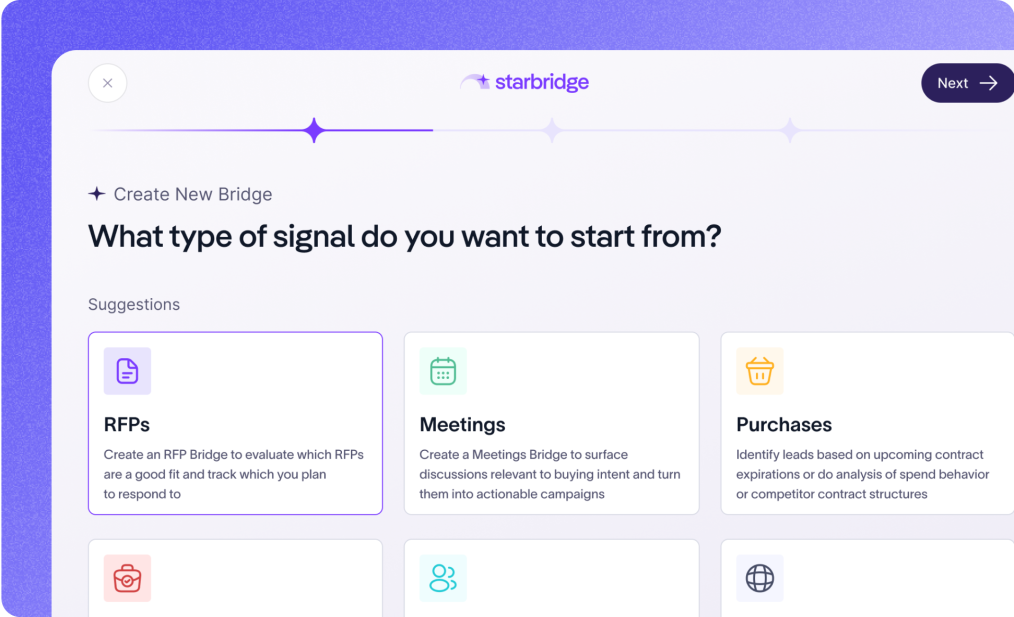
He eventually sold Coursedog in 2021 to JMI Equity in a nine-figure deal and stayed on the company’s board. But the itch to solve bigger problems didn’t fade. In 2024, he launched Starbridge, a platform that helps sales teams find and act on opportunities in the public sector. The software tracks when agencies might need new vendors or technology, giving businesses a head start to prepare bids or proposals. Recently, Starbridge secured a $42 million Series A round led by David Sacks’ Craft Ventures, a milestone that showed how much the industry’s perception was changing.
Wenig believes the biggest issue in the public sector is data fragmentation. He often points out that crucial purchasing and budget information hides across scattered PDFs, outdated directories, and agency meeting notes. Sales teams spend hours digging through public records to figure out who to contact or when opportunities might arise. Starbridge was built to fix that. The platform collects and organizes public data in one place, giving sales teams a ranked list of which government accounts are most likely to buy technology. It even provides real-time updates like leadership changes and new policy initiatives.
He explained that the goal is to help businesses focus on the right opportunities instead of wasting time on blind outreach. With Starbridge, teams see a clear, data-backed view of where to act and when to move.
The company’s fundraising process, according to Wenig, felt energizing. Craft Ventures came on board after an introduction through a friend, and Owl Ventures, CommonWeal Ventures, and Autotech Ventures also joined the round. Altogether, Starbridge has raised $52 million, including a previous $10 million seed round.
The next big step for Starbridge is to release what Wenig calls the “Starbridge integrated experience.” This feature will let users access Starbridge insights directly from the tools they already use—no need to constantly log into the platform. Wenig envisions a system where answers about an account appear instantly in a Slack message, every job change updates automatically in a sequencer, and every data insight connects straight into a CRM.
Several other companies operate in this space, including GovWin and GovSpend, but Wenig believes Starbridge stands apart because of its AI-driven workflows. These automated systems simplify how sales teams analyze government data, making their process faster and more actionable.
He recalls the days when raising money for Coursedog was a struggle. Back then, no major investors wanted to talk to him. Now, the environment feels different. The rise of AI has renewed interest in modernizing old, rigid systems. Wenig says it’s inspiring to see a new generation of founders diving into public-sector problems rather than avoiding them.
“Maybe fewer people want to run for office these days,” he said with a grin, “but more people want to build something that actually works. Seeing these mission-driven founders take on real, systemic challenges gives me hope for the future.”