




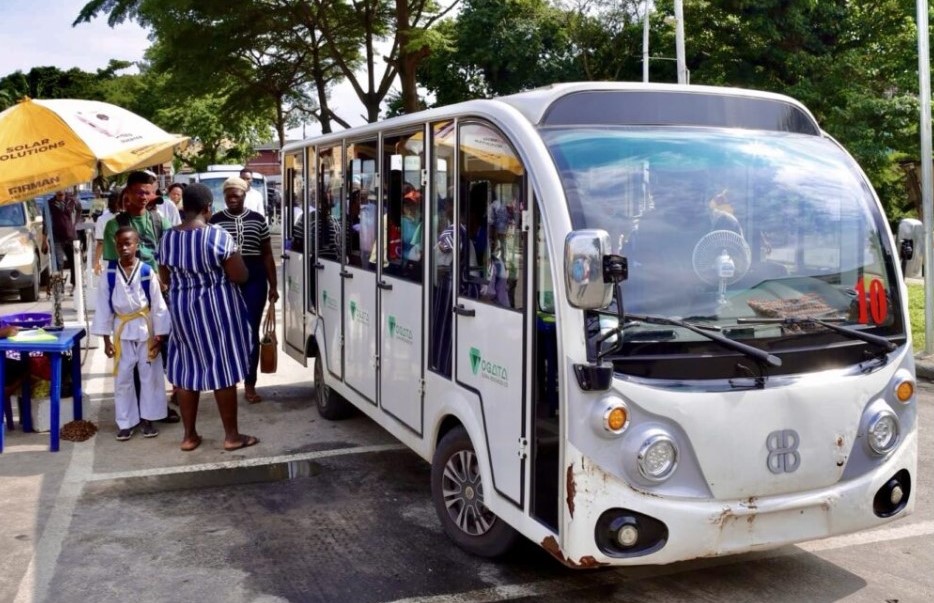

The Tertiary Education Trust Fund (TETFund) plans to introduce electric vehicles across twelve Nigerian campuses by November as part of its strategy to solve mobility challenges facing students in tertiary institutions.
During the National Association of Nigerian Students (NANS) event on Tuesday, the Executive Secretary of TETFund, Arc. Sonny Echono, explained that the initiative aims to reduce the risks and expenses students face while moving around campus. He said the plan aligns with President Bola Tinubu’s agenda to improve student welfare and learning conditions in Nigerian higher institutions.
Echono noted that students currently spend too much time commuting on campuses, especially those who live off-campus. He added that by next month, TETFund will launch electric vehicle services in selected institutions to make transportation safer, faster, and more affordable for students.
He also emphasized that the vehicles will operate at a lower cost than traditional shuttles, easing students’ cost of living. The project will empower students to manage and maintain the vehicles themselves to encourage accountability and ensure sustainability.
TETFund will also set up charging stations across the selected campuses to support the smooth running of the shuttles. The initiative is part of the federal government’s broader effort to enhance infrastructure, improve power supply, and provide better accommodation and learning environments in Nigerian tertiary institutions. Echono mentioned that the intervention complements the National Student Loan Scheme, implemented through NELFund, to support students’ education and welfare.
According to him, the President urged the agency to improve the overall study conditions for Nigerian students, including better hostels, classrooms, and commuting systems. TETFund has started heavy investment in hostel construction across seventy-two institutions, with more projects expected to be commissioned from December.
The NELFund scheme, launched in May 2024, has already onboarded over 282 institutions and more than 850,000 students. By September 26, 2025, the fund had disbursed more than ₦107 billion to 231 institutions, with ₦61 billion paid as institutional fees and ₦46 billion as student allowances.
Echono also explained that TETFund plans to expand its investment in learning infrastructure, focusing on equipping research laboratories, digital learning systems, and sustainable power projects. These efforts aim to strengthen research and education quality in Nigerian tertiary institutions. He said TETFund is currently constructing multipurpose research laboratories in universities located in Kano, Port Harcourt, Lagos, and Abuja to enable Nigerian researchers to conduct high-quality research locally without sending samples abroad.



In a report gathered by TechMarge, the University of Lagos (UNILAG) recorded a major milestone in sustainable campus transportation in January 2025 when it launched electric vehicles in partnership with Ogata Global Resources and Chart Eco Global Services. The university began with ten buses that covered more than 102,000 kilometres and reduced 16.78 metric tons of carbon emissions. UNILAG later expanded the fleet to thirty electric vehicles, projecting a mileage coverage of 700 kilometres and a reduction of 124 metric tons of carbon dioxide by the end of 2025.
The UNILAG electric vehicle project set a new national standard for cleaner and more efficient transportation in Nigerian higher institutions. It also demonstrated how sustainability could reduce costs, cut emissions, and create a healthier environment for students and staff.
Similarly, the Federal Polytechnic, Offa, achieved a significant innovation in August when it unveiled an indigenous electric vehicle named OKIN EV1. The polytechnic designed and built the car entirely in Nigeria, combining electric power with solar energy support. The OKIN EV1 can travel up to 125 kilometres on a single charge, which is roughly the same as a round trip between Offa and Ilorin, the capital of Kwara State.
The vehicle includes modern features such as a touchscreen display for real-time monitoring, a reverse camera for better safety, and a solar-powered extension system that increases driving time. The entire project started in 2024 and reached completion in less than six months.
The combined progress by TETFund, UNILAG, and the Federal Polytechnic, Offa, represents a bold move toward greener, more efficient, and student-focused transportation systems in Nigerian tertiary education. It signals a shift toward innovation, accountability, and environmental responsibility, making mobility easier and education more accessible for thousands of students across the country.